The neighborhood before sunrise
Walkers, runners and residents exercising begin to appear very early. Some people are already outside around four in the morning, and the routes become busier as daylight arrives.
The cooler temperature and reduced traffic make the morning feel different from the rest of the day. The presence of other walkers can make common routes feel active and accompanied, but it is not a guarantee of safety. Visitors should use normal city precautions.
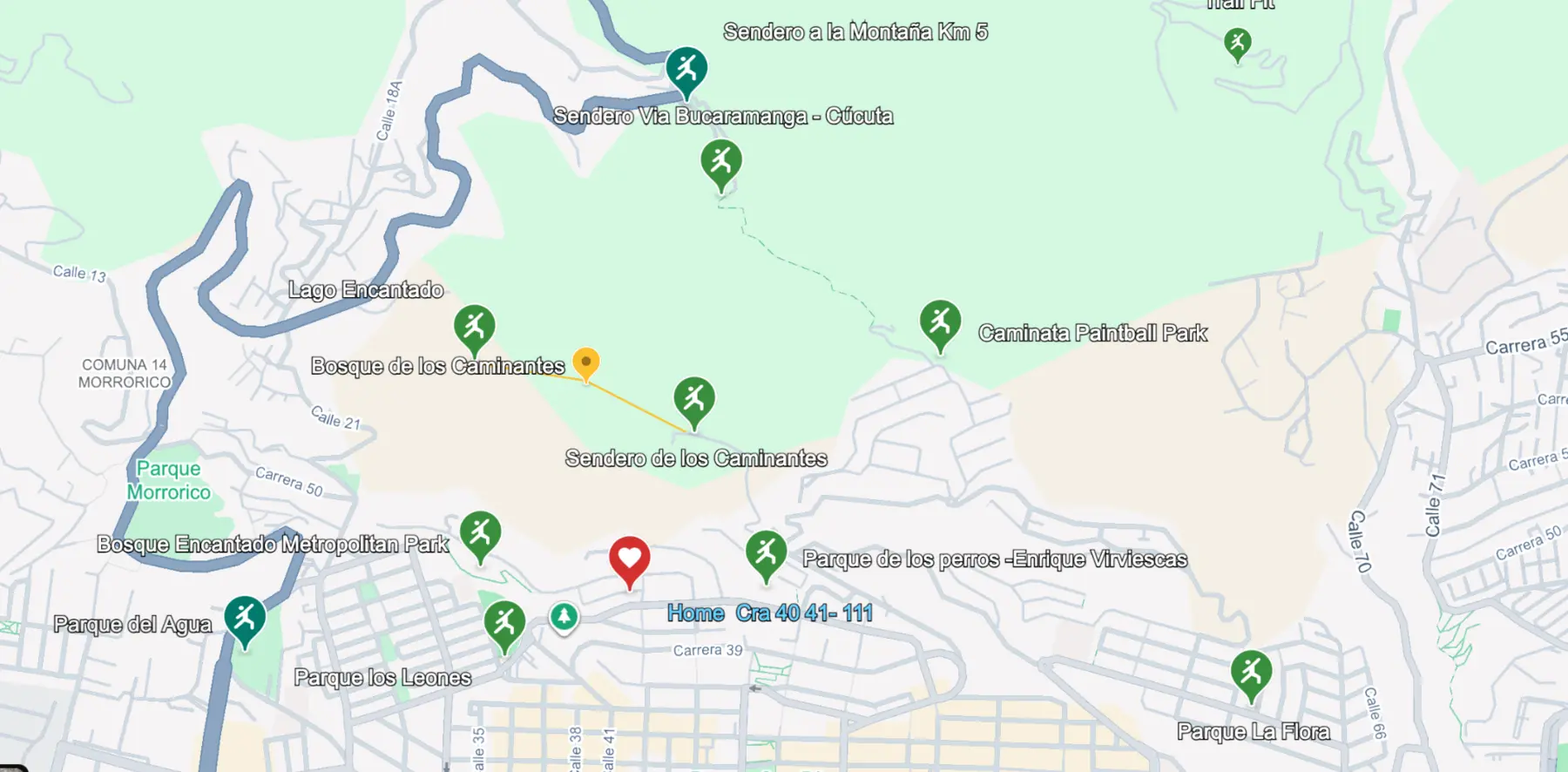
Los Leones and Enrique Viviescas parks
Los Leones Park is a practical destination for a shorter walk, a rest or exercise. Enrique Viviescas Park, known by many residents as the Dog Park, is another nearby point for walking and experiencing neighborhood life.
Both can be reached from the property without driving. Walking time depends on pace, route and incline; newcomers should begin with a shorter circuit and learn the return route in daylight.
UNAB and Pan de Azúcar
Longer walks can continue past the UNAB campus toward Pan de Azúcar. Bucaramanga City Hall describes an approximately five-kilometer return route with a viewpoint and options for both newer and experienced walkers.
Early morning is usually more comfortable before the strongest sun. Water, shoes with good grip and familiar routes are advisable, and trail conditions can change after rain.
Bosque de los Caminantes and the eastern hills
The map prepared from the house shows connections toward Bosque de los Caminantes and trails near the Bucaramanga–Cúcuta road. Some routes remain urban; others enter natural terrain and require more preparation.
New residents and visitors should begin with parks and shorter routes, then approach longer trails with people or organized groups that know the area.
A local routine for future guests
Nearby parks and trails are valuable for a family home and for a small hospitality concept. A guest could begin the day with a walk, stop for coffee near UNAB, continue into Cabecera and return without using a vehicle for every activity.
The experience comes from the location and the ability to take part in an ordinary local routine.